Former U.S. Vice President Dick Cheney has Died at the Age of 84
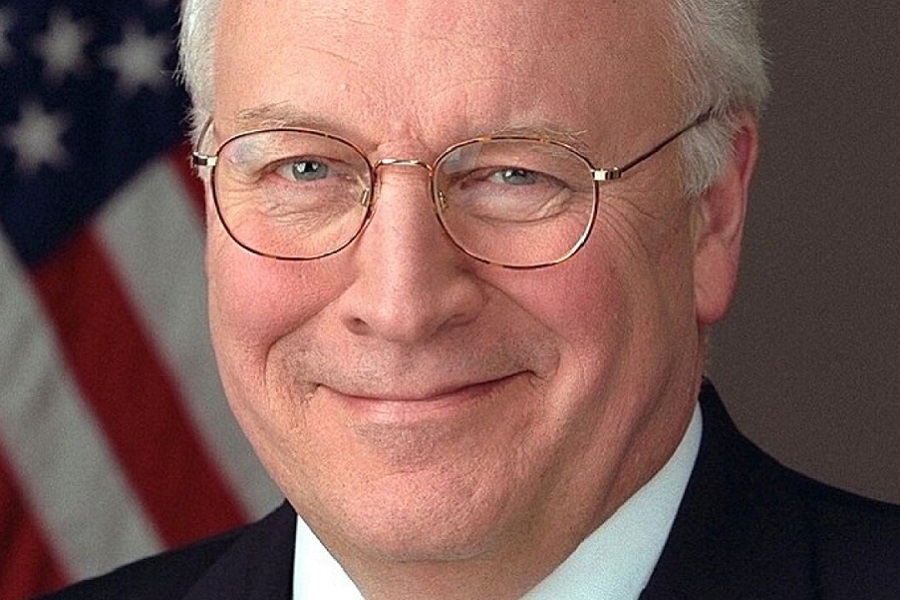
Former U.S. Vice President Dick Cheney, a powerful and controversial figure who shaped American foreign policy in the early 21st century, has died at the age of 84, according to a statement from his family.
He passed away Monday night due to complications from pneumonia and longstanding heart disease. He was surrounded by his wife, Lynne, and their daughters, Liz and Mary.
Born in Lincoln, Nebraska, in 1941 and raised in Casper, Wyoming, Cheney’s political career spanned more than four decades. He first entered national politics during the Nixon and Ford administrations, eventually serving as White House Chief of Staff under President Gerald Ford. Later, as a congressman from Wyoming and then Secretary of Defense under President George H.W. Bush, Cheney became known as a hawkish and pragmatic policymaker. During the Gulf War in 1991, he oversaw the U.S. military operation that expelled Iraqi forces from Kuwait, cementing his reputation as a skilled national security strategist.
Cheney returned to prominence in 2000 when George W. Bush selected him as his running mate.
As Vice President from 2001 to 2009, Cheney wielded unprecedented influence in shaping U.S. policy, particularly after the terrorist attacks of September 11, 2001. He was a key architect of the “War on Terror,” pushing for aggressive military and intelligence responses to global terrorism. Cheney strongly advocated for the 2003 invasion of Iraq, insisting that Saddam Hussein possessed weapons of mass destruction and posed a grave threat to the United States. Those claims were later discredited, and the war became one of the most contentious decisions in modern American history.
Cheney also helped expand executive authority in areas of national security, endorsing programs such as warrantless surveillance and enhanced interrogation methods that critics labeled as torture. Supporters, however, viewed him as a defender of American strength and an unflinching realist who prioritized national security above political calculation.
Throughout his career, Cheney faced criticism for his perceived secrecy and the centralization of power within the vice presidency. Even after leaving office, he remained unapologetic about his decisions, saying in interviews that he had “no regrets” about the actions taken in defense of the country.
His later years were marked by ongoing health challenges. Cheney suffered his first heart attack at age 37 and endured several more before receiving a heart transplant in 2012. Despite those struggles, he remained active in political and public life, often speaking out on national security and foreign policy issues.
In recent years, Cheney became a vocal critic of former President Donald Trump, breaking with much of his party and publicly supporting his daughter Liz Cheney’s efforts to hold Trump accountable for his actions surrounding the January 6th Capitol attack. In 2024, he made headlines again by endorsing Democratic candidate Kamala Harris for president, describing her as a defender of the Constitution.
Dick Cheney is survived by his wife, Lynne, whom he married in 1964, and their daughters, Liz and Mary. Liz Cheney, a former congresswoman from Wyoming, gained prominence for her leadership role on the House committee investigating the January 6th attack. Reactions to Cheney’s death poured in from across the political spectrum. Former President George W. Bush praised him as a “steady hand during some of America’s darkest days” and a “patriot who devoted his life to serving his country.” Critics, however, reflected on the enduring consequences of the Iraq War and the sweeping expansion of executive power under his watch.
Dick Cheney leaves behind a complicated legacy — one defined by immense influence, fierce conviction, and deep controversy. To some, he was a guardian of American security in a perilous era; to others, an architect of policies that reshaped the U.S. role in the world with consequences still felt today.